


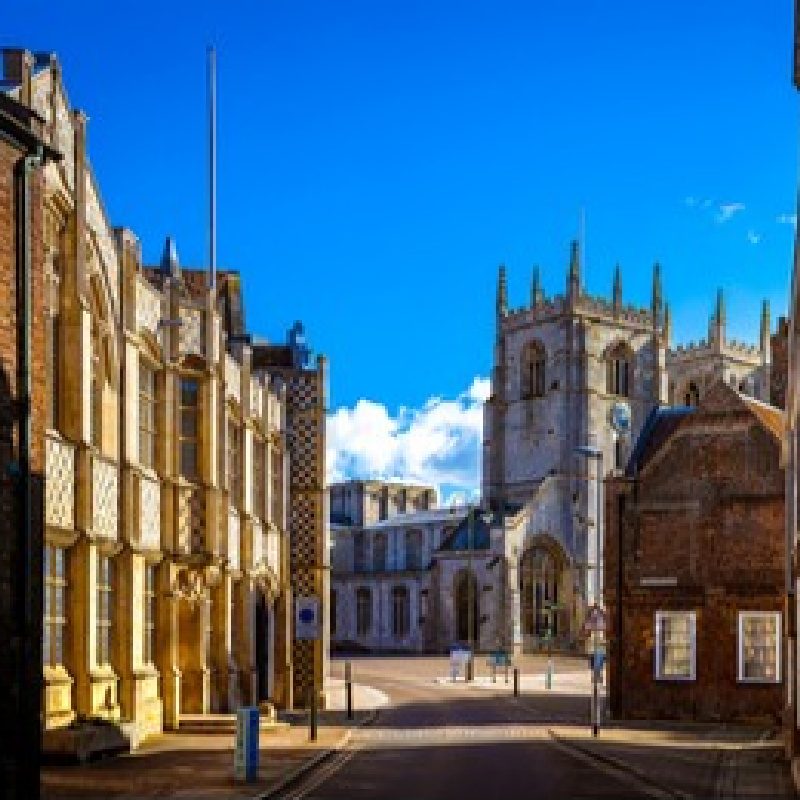
King’s Lynn may not be renowned as a place of great architectural design, but actually, it is home to some fabulous buildings. Built throughout the centuries, these now landmarks provide an insight into both the design periods of the ages and the stories of the people who frequented them. As one of King’s Lynn’s leading construction companies, we take a professional interest in the architecture in our home town, so we thought we’d take a look at some of King’s Lynn’s best buildings — some dating back to the 13th century — and find out what they tell us about the area and its past.
Have you ever noticed the carved heart in a diamond shape above a window of one of the buildings in the historic Tuesday Market Place?
You can see this symbol at numbers 15 and 16, and its meaning is steeped in legend. The square holds a long history of executions, during which members of the public would come to watch people being hanged or burned to death.
In 1590, Margaret Read was accused of witchcraft and burned at the stake. According to legend, as she was consumed by flames, her heart burst from her chest and hit the spot above the window before falling to the ground, beating to the River Ouse and sinking, causing the water to bubble like a cauldron. The heart seen on the wall today marks the point at which her heart hit the building, and a reminder of unthinkable days past of witch hunts and torture. Find out more and see the heart with a tour of King’s Lynn’s weird walk which you can download here.
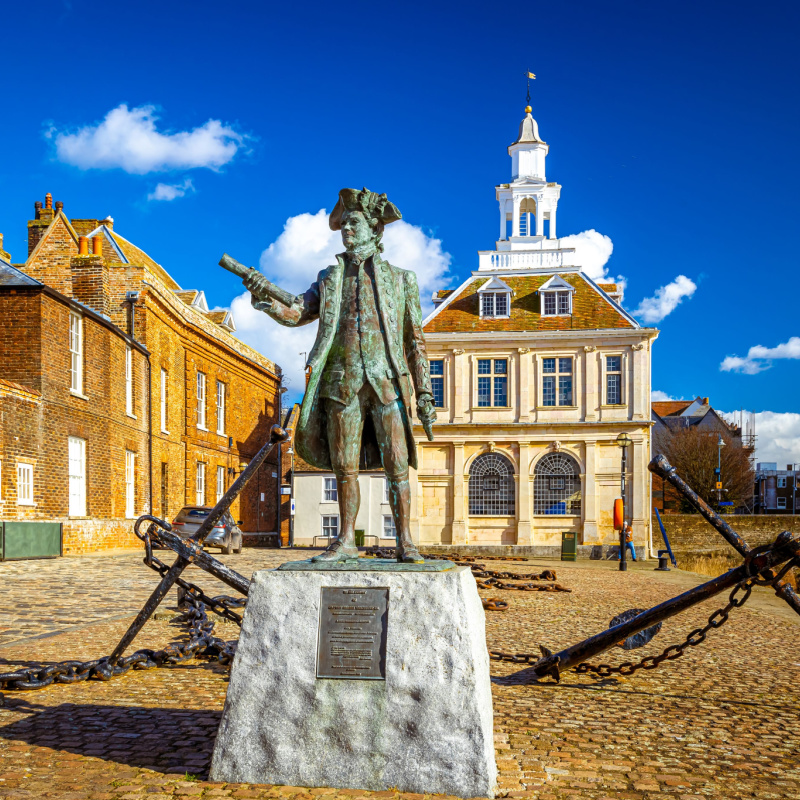
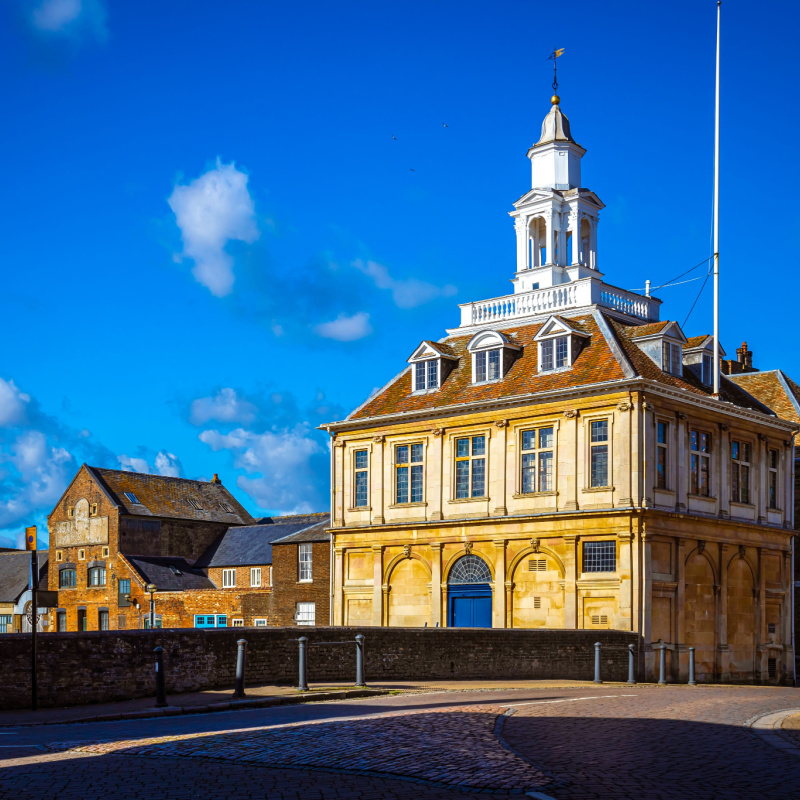
Nestled on Purfleet Quay, Custom House is one of King’s Lynn’s most recognisable buildings. Designed by King’s Lynn native Henry Bell, and built by Sir John Turner in 1683, it opened in 1685 as a merchant’s exchange, regulating trade through the port.
Bell designed a number of buildings in west Norfolk, including All Saints Church in North Runcton. Custom House is considered to be his most influential design, and was described as “one of the most perfect buildings ever built,” by architectural historian Nikolaus Pevsner.
Originally, the building had an open arcade supported by doric columns, which has now been filled in. The timber lantern, letting in light, is shaped like a Greek cross. With its position overlooking the quay, it truly is a beautiful building and one synonymous with the town.
Sited in The Walks, just to the side of King’s Lynn’s train station, this 15th century chapel was built as part of the Walsingham pilgrimage route by Robert Curraunce.
The chapel is octagonal in shape, with buttresses at each corner. Built of brick and ashlar, it stands three storeys high. The barrel-vaulted cellar has an elaborate fan-vaulted ceiling.
During the Civil War in the 17th century, the chapel was used by soldiers, and their ‘graffiti’ etchings in the walls can still be seen today. In its time, the building has also been used as a gunpowder store, a charnel house during the plague, a stable and an astronomical observatory. If that’s not the definition of a multi-purpose space, we don’t know what is! What an incredible document of our town’s long and illustrious history and definitely worth a visit next time you have a spare few hours.
As the largest surviving Medieval guildhall in the UK, St George’s Guildhall is a building that is synonymous with performance; it’s the oldest working theatre in the UK! The earliest recorded date of a performance here is January 1445 and recent research has shown that Shakespeare himself performed in the Guildhall in 1593, when London theatres were closed during the plague.
The Guildhall has been in use since 1428 and has had architectural work and additions built over the years as its purpose changed. In 1500, five buttresses were built against the north wall to improve stability, while in the late 1600s, a wine cellar was made in the undercroft.
As cinema gained popularity in the mid-20th century, the Guildhall became derelict and was at risk of being demolished. Since that time, fortunately, it has been converted and enhanced, and even now, over half a millennium since it was built, its future looks bright as a mixed-use arts venue.
St Nicholas’ Chapel is the largest of its kind in the UK. Most of the building now standing was constructed in the 15th century, after the previous chapel had to be rebuilt but the stone tower remains from the earlier period, and was built around 1225.
The chapel’s spire has had to be replaced multiple times over the years, which is unsurprising given the age of the tower. What we see today is a wooden spire, covered in lead, added in 1869 by Sir George Gilbert Scott.
Previously, in 1741, the spire had crashed down during a violent storm. Given the spire’s use as a navigational aid for shipmasters and merchants, an unimpressive replacement was quickly added, described as “a kind of wooden extinguisher stuck on to be seen at sea”. It just goes to show that construction has been contentious throughout the ages! Following concerns the spire may fall again in 1854, it was removed, and the chapel went without until Scott’s design was added 15 years later. We highly recommend a visit to take in the stunning architecture and calming atmosphere of this holy place.
From the street, all we see of Clifton House is the refronted facade from 1708. It’s a well-built, two storey, brick structure, but what lies behind is far more interesting.
The earliest sections of the house, found behind the 18th century additions, date back to the 1200s and the building has the largest in situ tiled floor in any secular building in Britain. An undercroft was constructed in the 14th century, and further additions and alterations in the centuries that followed. A warehouse range, for example, was built in Tudor times, and a five-storey tower was added at the back. Thanks to these, it can be considered a catalogue of building periods from the Medieval period onwards and one of the most important heritage buildings in King’s Lynn. Although privately owned, Clifton House has several open days and tours can be booked via the Historic Houses Association.
Designed by Herbert J Green, King’s Lynn library was built by Scottish philanthropist Andrew Carnegie, and opened in 1905. It was the first public library in the town; the previous Stanley Library required a subscription. Carnegie was passionate about access to education, eventually commissioning more than 650 libraries around the UK and Ireland.
The Edwardian building has some interesting features. The exterior has the look of a small castle, while the interior shows evidence of an Arts & Crafts influence, with stained glass skylights.
Throughout the First World War, the tower was used as an observation point for troops looking out for possible invasion and soldiers etched their names into the walls, which remain to this day.
With the announcement that the library is to move to the town centre, the future of this historic building is uncertain, but its position as a King’s Lynn landmark is immovable.
The Old Gaol House began as a Medieval prison with four cells. For over 400 years, the most notorious criminals in the town were imprisoned there. It later became a House of Correction, housing petty criminals and debtors.
The current building was built in 1784, in a typically Georgian style and it is the chains over the door which distinguish it as a prison rather than a home. Beautiful in its own right, the gaol house is part of the Town Hall and Trinity Guildhall complex, a series of four separate but connected buildings.
The cells remain today as part of the Stories of Lynn museum and charts the building’s history and punishments over the years including a ducking stool used to punish mostly women and stocks. A visit to the museum provides a chilling insight into the town’s less salubrious historical past.
The Town Hall itself has been at the forefront of life in King’s Lynn for more than 800 years and is today the home of King’s Lynn’s Tourist Information Centre and Stories of Lynn Museum, a fantastic interactive app with trails to explore the history of the town. Its spectacular rooms are now available to hire for weddings, events and business meetings, and a superb setting with its many historic features.
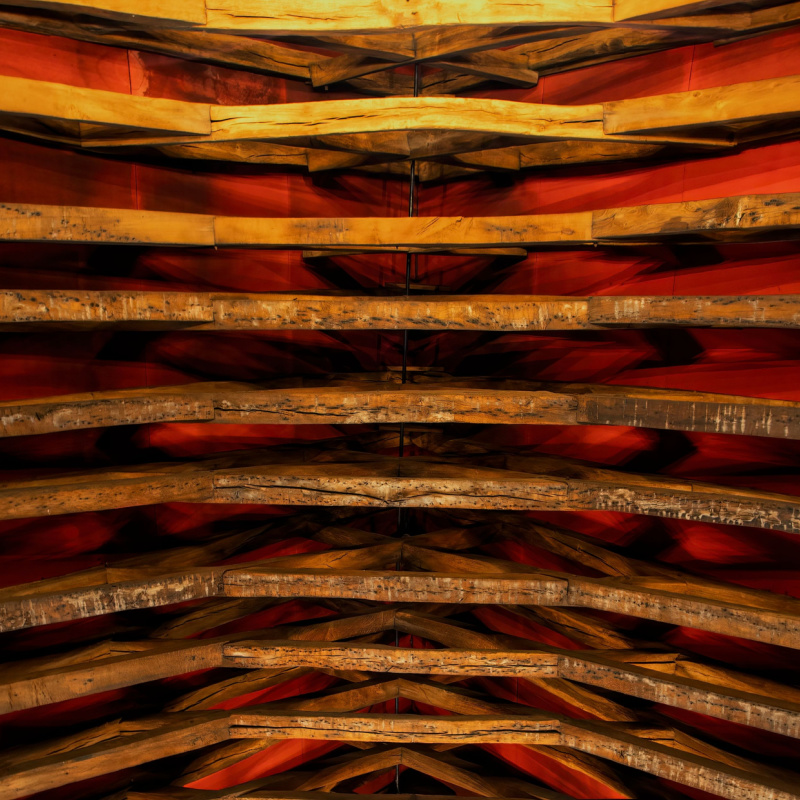
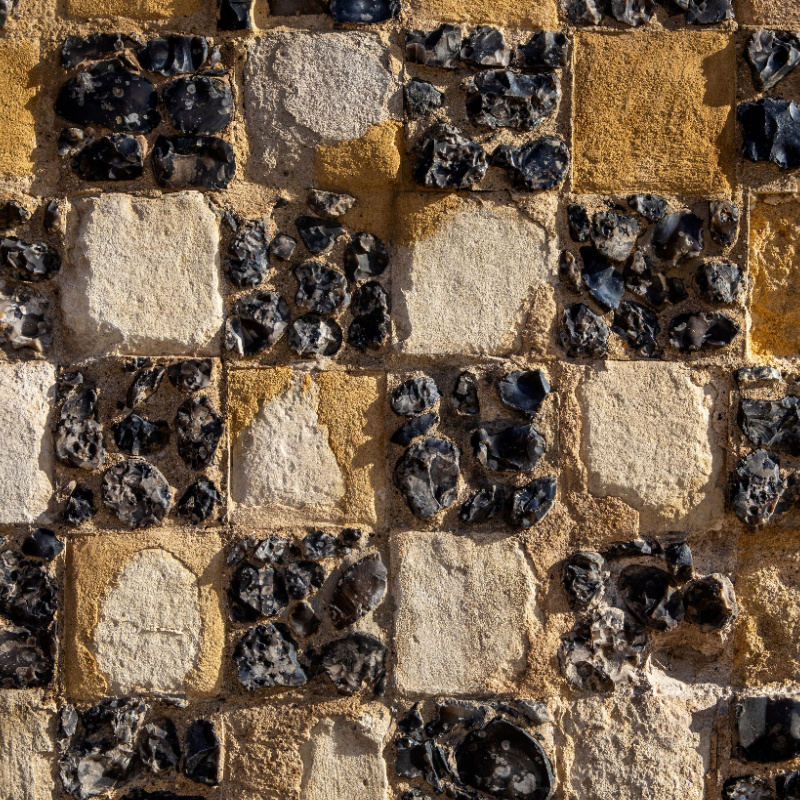
From the outside, its chequerboard architecture is particularly impressive and the rooms have been beautifully restored to maintain the building’s historic features. The Medieval Stone Hall features a stone floor – who knows whose feet have passed over these tiles? – and wide, oak-beamed ceiling, while the Georgian Assembly Room has a more ornate decor with six chandeliers and portraits of royals and local dignitaries.
Although the youngest of our top 10 King’s Lynn buildings, the Grade II listed Corn Exchange’s Victorian facade is an impressive 168 years old. Despite its grand frontage, originally built in 1854, the core of the building, which was a simple brick space supported by wrought-iron trusses, had become dilapidated and had to be restored by the mid-90s.
The £4.4million rebuild and expansion project provided a flexible design and more space for back-of-house facilities. Jon Mills created the balustrade surrounding the stairs, which is made up of 400 clapping hands cut in metal in a nod to the theatrical and cinematic function of the space. Taking inspiration from the local area, the new cinema enjoys a coastal and natural colour palette and design scheme which successfully blends past and present. From its original function as a trading centre to a modern entertainment facility, the Corn Exchange is a fantastic example of how historic buildings can be successfully repurposed to meet the changing needs of the local community.
What we can learn from all of these buildings is that the need for change, refurbishment, alteration and expansion may come at any point. Buildings can provide multi-purpose spaces and, as home or business owners, our requirements may change over the years, but working with an expert team there is a real opportunity to retain the beauty and heritage of a period property while creating a well-designed and effective functional space. If you are looking to alter or expand your living space, get in touch for a friendly chat about your goals with Dwellings4U’s expert team on 01553 606120 – we look forward to helping you with your plans and being a part of King’s Lynn’s future development.





Input your search keywords and press Enter.